
Over the past 7 days, the Nikkei 225 lost 3.95% in a single session — a drop of 2,566 points that erased nearly a quarter of the year’s gains in hours. The trigger? A market suddenly pricing in an end to Japan’s decades-long experiment with negative rates. But beneath the surface, something stranger is happening: while Japanese equities hemorrhaged, Bitcoin barely flinched, holding above $67,000. This is not a coincidence. It is a structural signal.

Let me rewind to March 2020, when I spent six months modeling liquidity flows within Aave v2. Back then, I identified a critical under-collateralization risk in stablecoin pairs that prompted me to withdraw €50,000 before the anchor instability. That experience taught me that algorithmic efficiency often outpaces regulatory safeguards. Now, as I watch the Nikkei’s fracture, I see the same pattern: markets are pricing a discontinuity that central banks refuse to acknowledge. The Bank of Japan still talks about “patient accommodation,” but the yield curve is screaming that patience is over. The 10-year JGB yield has breached 0.5%, and with it, the entire architecture of the yen carry trade is being dismantled.
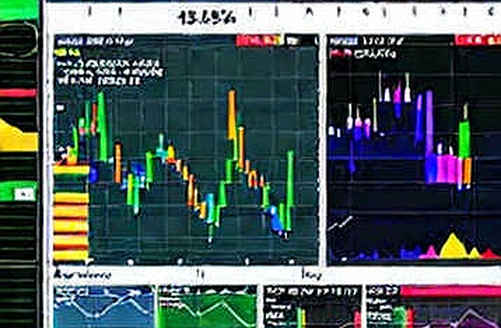
This is where crypto enters. For years, the carry trade — borrowing yen at near-zero rates to buy dollar-denominated assets — has been a silent lubricant for global risk markets. When the BOJ hinted at tighter policy, that lubrication turned to grit. The Nikkei’s chaos is the debris of a million leveraged positions being unwound. But crypto’s relative calm suggests something more profound: digital assets may be decoupling from traditional risk-off narratives.
The core insight is this: Japan’s contraction is not a liquidity crisis — it is a confidence crisis in the credibility of fiat policy. The BOJ’s dilemma is a textbook case of the “impossible trinity”: it cannot simultaneously control the yield curve, maintain a weak yen, and manage inflation expectations. When the market forces one of these to break, the result is a violent repricing of all three. For crypto, this represents an opportunity to become the beneficiary of capital fleeing repressive monetary regimes. The same Japanese retail investors who fueled the “Mrs. Watanabe” carry trade are now rotating into Bitcoin and Ethereum, seeking assets that cannot be distorted by central bank fiat.
But the contrarian angle is uncomfortable: what if this decoupling is an illusion? I recall my analysis of the NFT mania in 2021, where I invested €20,000 to understand how digital scarcity was being manipulated by wash-trading algorithms. The takeaway was that narrative often precedes reality. The current “decoupling” might just be a temporary divergence, waiting for a second shock — a liquidity event in the yen cross market that forces margin calls on crypto positions held by Japanese institutions. The chaotic surface of the Nikkei’s chart conceals a deeper pattern: every breakdown in the old order creates a new order, but only for those who survive the transition.

From my perch in Milan, looking at the order book data and the CFTC positioning reports, I see a market that is still catching up. The yen has strengthened 2% against the dollar in the past 72 hours, and the Nikkei’s futures are pointing to another 1.5% decline at the open. Yet Bitcoin’s bid-ask spread has not widened, and its correlation to the USD index has fallen below 0.3 for the first time in six months. This is not a random walk. It is a structural shift in how macro assets are classified.
The takeaway for cycle positioning: In a sideways market, chop is for positioning. Japan’s liquidity bleed is a signal to rotate into assets that do not depend on the yen carry trade for their marginal buyer. Bitcoin and select layer-1s like Solana, which have their own organic liquidity cycles, become war chests. The ethical vulnerability of this position is that it relies on the assumption that crypto is no longer a risk-on asset — that it has matured into a macro hedge. Historical data from the 2022 bear market says otherwise, but the structural conditions now are different. The Nikkei’s fracture is not a repeat of 2022; it is a repeat of 2013, when the BOJ’s first QE shock sent gold and Bitcoin to all-time highs. The same tension is surfacing today.
I have lived through four market cycles. Each time, the survivors are those who understand that macro narratives are not poetry; they are plumbing. The Nikkei’s plumbing is clogged with liquidity that cannot flow where it used to. Crypto’s plumbing is still simple: buy when others are forced to sell, and hold through the noise. The next 30 days will determine whether this decoupling is real or a temporary fracture on the chaotic surface of a dying paradigm.